Wednesday, January 27, 2016

Margaret Bourke-White

June 14, 1904 (my birthday!) – August 27, 1971
Bourke-White was the first foreign photographer permitted to take pictures of Soviet industry, the first American female war photojournalist, and the first female photographer Life magazine, where her photograph appeared on the first cover. 
"The woman who had been torpedoed in the Mediterranean, strafed by the Luftwaffe, stranded on an Arctic island, bombarded in Moscow, and pulled out of the Chesapeake when her chopper crashed, was known to the Life staff as 'Maggie the Indestructible."
She died of Parkinson's disease.
Buchenwald Prisoners, 1945 (Time Inc.)
Margaret Bourke-White
Monroe Gallery

Light Shadow Reflection


backlit silhouette
Hana Haley

backlit silhouette
Hana Haley
shadow
Imogen Cunningham

reflection
Imogen Cunningham
backlit + shadow
Hana Haley
backlit non-silhouette
Olivia Bee
This photo by Olivia Bee is a properly exposed backlit image, although Bee may have even overexposed the image for effect. She likely metered a stop or two above the meter reading on the model. The image has an ethereal quality that's enhanced by the exposure of the model, soft lighting and shallow depth of field. If Bee metered in the opposite way, the model would be a silhouette or at least a dark figure and because the model's soft features wouldn't be the focus any longer, the photo would be much less soft and angelic.

Wednesday, January 20, 2016

Elements of Design


LINE

jagged
Imogen Cunningham
curved
Deborah Turbeville
parallel
Louis Stettner
Window Cleaner, Midtown, New York - 1953
diagonal
Lina Scheynius

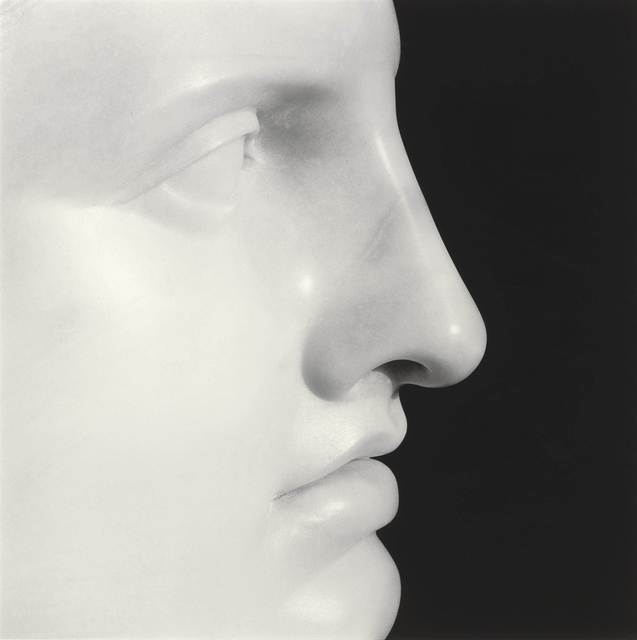
TEXTURE
Robert Mapplethorpe, 'Apollo,' 1988, Robert Klein Gallery
smooth
Robert Mapplethorpe
Apollo, 1988
bumpy
Vilde Rolfson
Plastic Bag Landscape
sharp
Syrie Moskowitz

rough
Deborah Turbeville
SHAPE


organic
Ray Bidegain
Pears with Leaves
geometric
Imogen Cunningham
geometric
Syrie Moskowitz
geometric
Louis Stettner
Manhattan from the Brooklyn Promenade - 1954

SPACE

good use of negative space
Andela Vidic
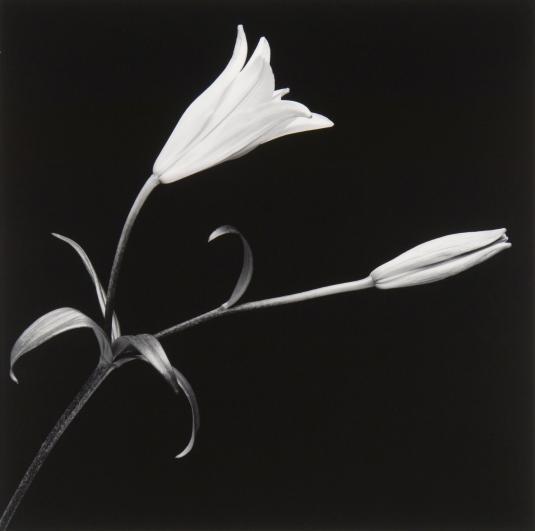
VALUE


high value
Syrie Moskowitz

Robert Mapplethorpe, 'Lily, MAP-1947,' 1989, Jackson Fine Art
high value
Robert Mapplethorpe
Lily, 1989

low value
Ana Kras
low value
Ana Kras


Monday, January 18, 2016

Photo Composition

Toni Frissell:
Leading lines
Toni Frissell
Minor White, Movement Studies Number 56, 1949:
Strong diagonals
Minor White
Movement Studies Number 56, 1949
Rule of thirds
Syrie Moskowitz
Mario De Biasi:
Bird's eye
Mario De Biasi
mpdrolet:


Serena Herrick
Bird's eye
Serena Herrick
© Ralph Crane:
Bug's eye
Ralph Crane
bonitavista:


Magdalen College, Oxford, England
photo via  charlotte 
Frame in a frame
Photographer unknown
Close up
Lina Sheynius

Tuesday, January 12, 2016

Types of Motion

Panning
Alain Laboile
Slow motion 
Paul Schneggenburger
(a photo taken over the course of a night of two people sleeping)

Freeze action
 Unknown
Total motion 
Kerry Skarbakka
Camera shake 
Olivia Bee

Photo Comparison


The first photo shows two dancers in action, the blur suggesting energy and action and liveliness. While the first photo may be more beautiful, the second expresses more because it captures a specific second of the emotional and physical process of dancing. The emotion of the first photo is demonstrated through the technique of the photographer, whereas the emotion of the second stems from the expression and pose of the humans in the photo, which to me personally is more powerful and expressive. 


Exploring Depth of Field and Abstraction

Abstraction is defined as "freedom from representational qualities." Representational qualities are ones which are integral to visually identify what something is. For example, four silver spikes in the abstract don't inform us that we are looking at a fork, but the curve and shine of the metal and the handle do. Taking something, preferably something so familiar we don't dissect its elements any more, out of its context and removing essential elements to its identification is abstraction.

Abstraction

Paul Strand

Imogen Cunningham

(How do those images use depth of field?)

Depth of Field

Shallow

Rachel Eastin

Imogen Cunningham

Deep

Ryan McGinley

Olivia Bee


Saturday, January 9, 2016

Old Process, New Artist

Anthotypes

"The anthotype process was invented by Sir William Herschel in 1842. An emulsion is made from crushed flower petals or any other light-sensitive plant, fruit or vegetable. A coated sheet of paper is then dried, exposed to direct full sun-light until the image is bleached out. This is done ideally in a printing frame over 1-3 days or more depending on weather and material. No fixation is required. Results vary greatly from plant to plant and the strength of the emulsion employed. The resulting images are exquisite and often almost wispy or dream-like."

Painswick Purple Alium
Nettie Edwards
Versailles Sweet Pea
Nettie Edwards